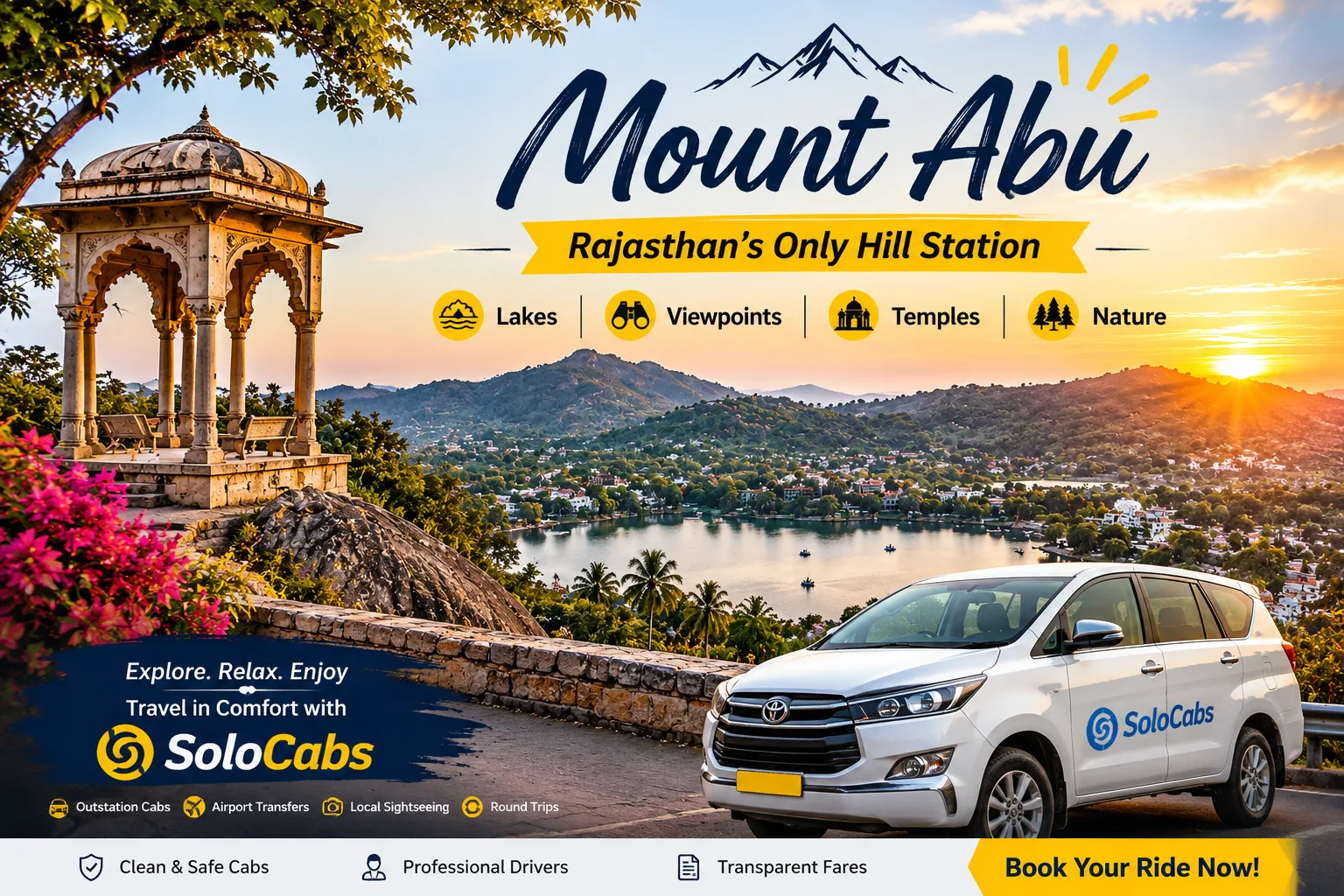
Best Places to Visit in Mount Abu, Rajasthan: A Travel Guide
As you think of Rajasthan, you probably think of forts, desert highways and historic cities. However, Mount Abu is somewhat different from this.
Rajasthan's one and only hill station, surrounded by the scenic Aravalli ranges. Its climatic condition is cooler compared to other cities of Rajasthan; hence as you go higher to the hill station, you will observe the change in the landscape of the city. It has lush green nature, rocky hills, temples and a lake with shops and cafes around it.
Mount Abu is not a big town, and you certainly don't need 7 days to explore! 2 days will see you cover pretty much all the main sights. But don't feel like you have to be rushing around, and do make sure you get some good hours at some of the sights where you really need to take your time.
For those visiting the locations, here are a couple of recommendations for your list of destinations, and some other tips and tricks for your planning.
Best Places to Visit in Mount Abu
1. Nakki Lake
Nakki Lake is a favourite destination among tourists visiting Mount Abu. Nakki Lake is the perfect place to start your trip.
Behind the lake are rolling hills and rocky crags. You can hire a boat, stroll along the water's edge or just sit and watch the scene. It's a popular spot with locals who are out on a walk in the early evening.
Additionally, there are a couple of small shops and some food stalls. So if you want to take your trip easy, then leave some time to visit this part of the park. Take a boat tour around the lake and walk in the direction of Toad Rock.
2. Dilwara Jain Temples
It is regarded as one of the pilgrimage sites of Mount Abu. Absolutely, it is a 16th-century grand temple structure created with white marble & lead, with top-most works & radiant carving.
The exterior of the temple grounds is rather dull, but it is what is located inside that counts. Enter the temple, and you are greeted by the stunning beauty of the marble pillars, intricate ceilings and engraved walls. Take a closer look at the detailed design, and you will understand why these temples are renowned.
Enter the stunning temple complex, which comprises five Jain temples dating from the 11th to 13th centuries, and one of the finest Jain temples in India. Just keep in mind that photography and mobile phones are prohibited in the temples. Confirm the opening and closing hours of temples in advance.
3. Guru Shikhar
Want a bird's-eye view of Mount Abu? Continue to Guru Shikhar. Rising to 1,722 metres, it is the tallest peak in the Aravalli Hills. As you ascend on a serpentine mountain road, the views unfold as you rise.
Once you arrive at the parking, you will have to walk up some stairs to get to the temple, which is called Guru Dattatreya Temple. This walk is up the hill but totally worth it for the views!
A morning trip may be the best time to go. The water visibility is generally better, and you get to enjoy the scenery before the crowds set in.
4. Toad Rock
Toad Rock is a natural rock, which looks similar like a Toad of a toad sitting on a rock. It is situated close to Nakki Lake and is one of the most beautiful photography spots in Mount Abu.
It is quite an uphill walk to the viewpoint. The summit offers stunning views of the surrounding hills and lake.
No need to make a special visit just to see it. While you make a round around Nakki Lake, you can walk across Toad Rock. Carry shoes with good grip as you'll need to walk on rough terrain.
5. Achalgarh Fort
You must visit the Achalgarh Fort. The fort was built by the Paramara rulers and was rebuilt in 1452 AD by Maharana Kumbha. Although some parts are still in ruins, the fort's surrounding hills make it a must-visit destination.
Don't expect a completely restored palace with huge regal chambers and exhibits. This is simply a place to visit historic ruins and take in the views.
Achaleshwar Mahadev Temple is nearby, so you can visit both places together.
6. Achaleshwar Mahadev Temple
This temple is near Achalgarh Fort and is dedicated to Lord Shiva.
The temple is among the region's most popular spiritual destinations. There are many local legends and stories associated with the temple; the legend of a footprint of Lord Shiva is also here.
You'll be coming from Achalgarh so don't leave it to go past if you're already there. Take a little while, look around the temple while you're at it. Just follow local customs at the temple.
7. Mount Abu Wildlife Sanctuary
Mount Abu has more than just temples and viewpoints. The forest area around Mount Abu is also worth a visit.
Mount Abu Wildlife Sanctuary is part of a vast stretch of desert in the entire length of the Aravallis. It is believed to be home to a handful of animal and bird varieties, including the leopard, the hyena and the pangolin.
You may not even spot any animals during a quick detour, and that's all right. You can always gaze upon the scenic beauty of the woods. If you're visiting as a birdwatcher or for any kind of nature visit, please confirm visiting arrangements and access rules before you travel.
8. Trevor's Tank
Trevor's Tank is a small waterbody that is surrounded by a forest. Compared to the bustling vicinity of the Nakki Lake, it is a much calmer spot.
It is an ideal destination for bird lovers and wildlife enthusiasts. If you're outdoorsy, this stop is going to be right up your alley.
Take water, don't pollute and don't get near the animals. Adhere to local guidance on where visitors are permitted to go. It is worth adding if you have spare time at the end of your Mount Abu sightseeing.
9. Peace Park
Your trip doesn't have to include all tourist stops. A little escape from crowded places can make your trip more enjoyable. It is situated on the Guru Shikhar and Achalgarh side of Mount Abu, so you can add it during your tour of Mount Abu.
The park is maintained by the Brahma Kumaris and is famed for its lush greenery and tranquil environment. Here, tourists enjoy walks in the grounds, with areas to relax and sit quietly.
10. Arbuda Devi Temple
Arbuda Devi Temple is another well-known spiritual attraction in Mount Abu. This temple stands out for its setting within a cave, attracting devotees from far away.
To reach the temple, visitors need to climb the staircase going through the mountain. Going up the stairs at noon can be a little bit difficult due to the sun, so you should plan your visit to go early in the morning.
Navratri is an auspicious time when many pilgrims visit the temple in large numbers. If you are in the city to enjoy the Navratri festival, then anticipate crowds.
Good Time to Visit Mount Abu
Mount Abu has a slightly different climate from most of Rajasthan. Summers are comparatively more comfortable, monsoon brings greenery to the hills, and winters can get quite cold.
Here's what you can expect during different months.
|
SEASON
|
MONTHS
|
WHAT THE WEATHER IS LIKE
|
|
Summer
|
March to June
|
Pleasant mornings and evenings, warmer afternoons
|
|
Monsoon
|
July to September
|
Green surroundings, rain and mist
|
|
Winter
|
October to February
|
Cool days and cold mornings and nights
|
Best Month to Visit Mount Abu
Visitors can enjoy sightseeing in Mount Abu from October through March.
If you'd like to visit temples, viewpoints and the local market, November and February are the most ideal months.
December and January are the coldest months. Winter lovers will be happy during this season, so bring some warm clothes!
The monsoons are something else. The hill stations get greener and the scenery looks spectacular after the rains. But the rains can put paid to all your plans, so keep all your plans flexible.
Mount Abu and Nearby Places to Visit
If you have more than two days, you can explore a few destinations around Mount Abu. Certain spots are nearby, while a few are located at a greater distance.
Abu Road
Abu Road is positioned along the foothills of the Mount Abu region. It is primarily the railway link for tourists visiting the hill station.
For those coming by train, you will probably have to stop at Abu Road and then proceed to Mount Abu by taxi or other means.
Udaipur
Udaipur is about 160 km from Mount Abu by road. It is recognised for its rich heritage, charming lakes and historic streets.
You may also want to see City Palace, Lake Pichola, Jagdish Temple and Saheliyon Ki Bari. For a couple of weeks' Rajasthan holiday, Udaipur and Mount Abu make a good holiday combo.
I wouldn't recommend squeezing both into a rushed two-day trip, though. You'll spend too much time travelling.
Ranakpur
Ranakpur is home to Jain temples and elaborate marble carvings. The temple is known for its intricately carved stone pillars.
Consider if you are heading to Udaipur and can spare another day. Verify the route and temple timings before planning.
A Simple 2-Day Mount Abu Sightseeing Plan
If this is your first visit, you can cover most of the popular attractions in two days. The trick is to group nearby places instead of travelling back and forth.
|
DAY
|
PLACES TO VISIT
|
|
Day 1
|
Dilwara Jain Temples, Nakki Lake, Toad Rock, Arbuda Devi Temple and local market
|
|
Day 2
|
Guru Shikhar, Peace Park, Achalgarh Fort, Achaleshwar Mahadev Temple and Trevor's Tank
|
You can change the order depending on where you're staying and the opening hours of the attractions.
If you prefer a slower holiday, leave out one or two stops. There's no need to turn your vacation into a checklist.
Mount Abu Local Sightseeing Package: What Should You Include?
If you're travelling with family or don't want to drive around unfamiliar hill roads, booking a local cab can make sightseeing easier.
A full-day local sightseeing plan can include:
Dilwara Jain Temples
Guru Shikhar
Nakki Lake and Toad Rock
Achalgarh Fort
Achaleshwar Mahadev Temple
Trevor's Tank
Peace Park
Not every package will cover all these places. Some attractions may also have different visiting hours.
Check the total travel time, vehicle category, waiting charges and parking costs before confirming your cab. It is always better to clarify everything beforehand.
How to Reach Mount Abu
Mount Abu is connected by road and rail. The final stretch of the journey takes you uphill through the Aravalli Range.
By Train: Travellers can reach Abu Road Railway Station, which is about 28 km away from Mount Abu. Trains connect it with several major cities. From the station, you can hire a taxi or arrange local transport.
By air: Mount Abu does not have its own airport. Udaipur's Maharana Pratap Airport is one of the commonly used airport options. From there, you'll need to continue by road.
By road: You can reach Mount Abu from Udaipur, Ahmedabad, Jaipur and other nearby cities by bus, car or cab. The road journey is quite scenic as you approach the hill station.
If you're coming from Delhi, keep enough time for the drive. It is a fairly long journey, so an early departure helps.
A Few Things to Know Before Visiting Mount Abu
A little planning can make your trip much easier.
Carry warm clothes: Even if you're visiting in summer, evenings can feel cool. Winters are noticeably colder.
Start early: Guru Shikhar and other popular attractions are better visited earlier in the day.
Wear comfortable shoes: Some places involve walking uphill or climbing steps.
Check temple timings: Especially for Dilwara Jain Temples and other religious sites.
Expect crowds on weekends: Nakki Lake and the main market can get busy during holidays.
Keep some cash: It can be useful at smaller shops and local stalls.
Check the weather: Monsoon rain can affect outdoor sightseeing.
Plan Your Mount Abu Trip
A visit to Mount Abu brings a different experience compared to other Rajasthan destinations. You can spend the morning visiting temples, take a drive through the hills and end the evening near Nakki Lake.
Two days are enough for a good introduction to the town. Just don't try to fit every attraction into the same day.
If you're planning local sightseeing, arrange your transport according to the places you want to cover. A private cab can be useful when travelling with family or when you want to visit attractions outside the main town.
You can explore SoloCabs's cab options for your Mount Abu journey and plan your local travel before leaving.
Frequently Asked Questions About Mount Abu